Lift Modernisation
Upgrade control systems, drives, doors and safety equipment for better reliability and efficiency. Free survey.
Lift technology has moved on considerably over the last two decades. Control systems that were standard in the early 2000s are now difficult to support, spare parts become harder to source, and energy consumption is higher than modern equivalents. Lift modernisation replaces the ageing technology inside an existing lift while keeping the shaft, structure and, where appropriate, the car itself. For most buildings it delivers the reliability and efficiency of a new lift at a fraction of the disruption.
Lancs & Cumbria Lifts carries out lift modernisation for commercial, residential and industrial buildings across Lancashire, Cumbria, the North West and the wider UK. Our engineers work on all major makes and models, and every project starts with a free survey so you know exactly what is being proposed and why.
Get Your Free Quote
Get in touch with our team for a free quote using the contact form below. Alternatively, call our team on 01942 242 413 or email us at enquiries@lclifts.co.uk and we’ll be happy to help.
What Is Lift Modernisation?
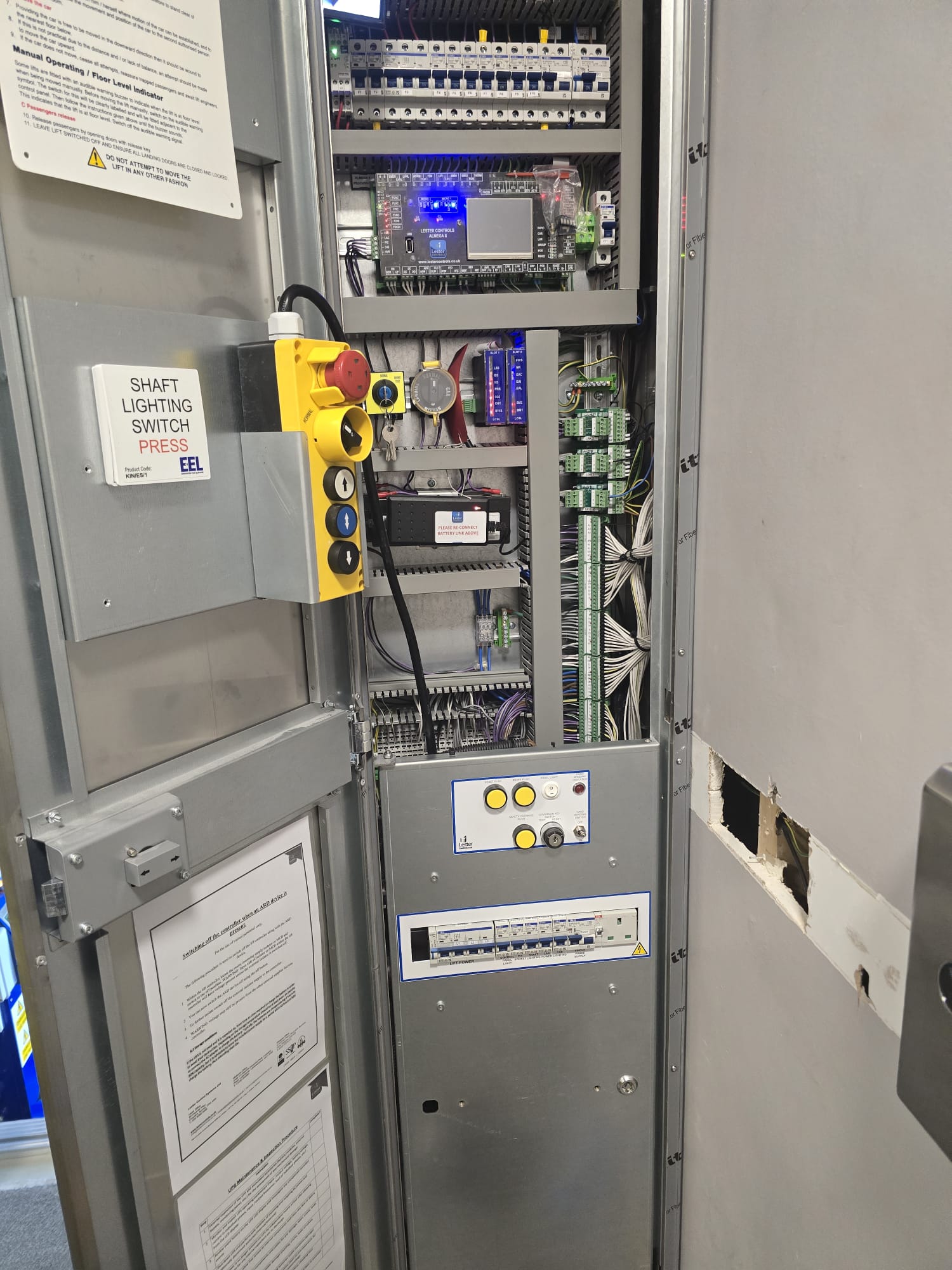
Lift modernisation is the planned replacement of the components that govern how a lift performs: the control system, the drive and motor, the door operators and the safety equipment. The shaft, guide rails, landing structure and often the car frame are retained. In effect, the lift keeps its footprint in the building but gains a new set of working parts.
That distinction matters. Because the structural elements stay in place, a modernisation project avoids most of the builder’s work, extended downtime and cost that a full replacement involves. The result is a lift that stops more accurately, responds faster, uses less energy and can be supported with readily available parts for many years to come.
WE TAKE LIFT SAFETY AND RELIABILITY
TO NEW HEIGHTS
Modernisation, Refurbishment Or Replacement: Which Applies To Your Lift?
The three terms are often used loosely, but they describe different levels of intervention and it helps to be clear about which one your building needs.
Lift refurbishment concentrates on condition and appearance. Worn components are replaced, cabin finishes are updated and the lift is brought back to a good standard without changing the technology behind it. It suits lifts that work reliably but look tired or have specific components nearing the end of their life.
Lift modernisation replaces the technology. Controls, drives and door equipment are upgraded so the lift performs to a modern standard. It suits lifts where faults are becoming more frequent, parts are becoming difficult to source or energy use is higher than it should be, but the shaft and structure remain sound.
Full replacement removes the entire installation and starts again, usually with a new lift installation into the existing or an adapted shaft. It is the right answer where the shaft itself is unsuitable, where the lift no longer meets the needs of the building or where the existing equipment is beyond economic repair.
Many projects combine refurbishment and modernisation. Our survey report sets out which elements of your lift fall into each category so you can decide on scope with a clear picture of the options.
Signs Your Lift Is Ready For Modernisation
Few lifts fail suddenly. Most give warning over a period of months or years, and the signs below are the ones our engineers see most often before a modernisation is recommended.
If two or more of these apply, it is worth asking for a survey. The cost of continuing to repair an ageing lift can quickly exceed the cost of resolving the underlying problem.
What A Modernisation Project Covers
Every modernisation is specified to the lift in front of us, but most projects draw on the following areas of work.
Control System Upgrades
The controller is the brain of the lift. Replacing an older relay or early microprocessor panel with a modern controller improves call handling, levelling accuracy and fault diagnostics. Modern controllers log faults, support remote monitoring and are built around components that will remain available for years. For many buildings a control system upgrade is the single most effective step in a modernisation.
Drive System And Motor Upgrades
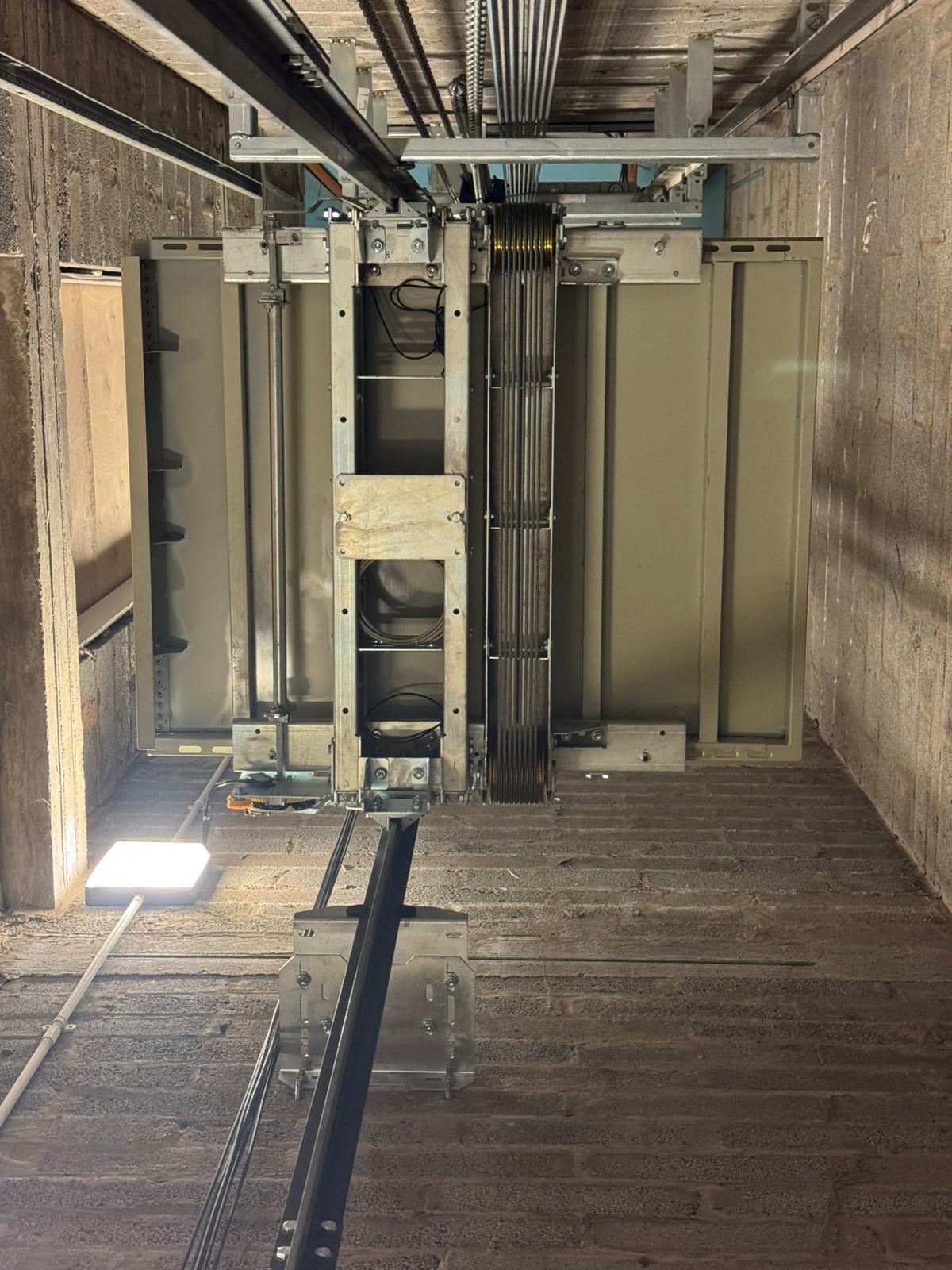
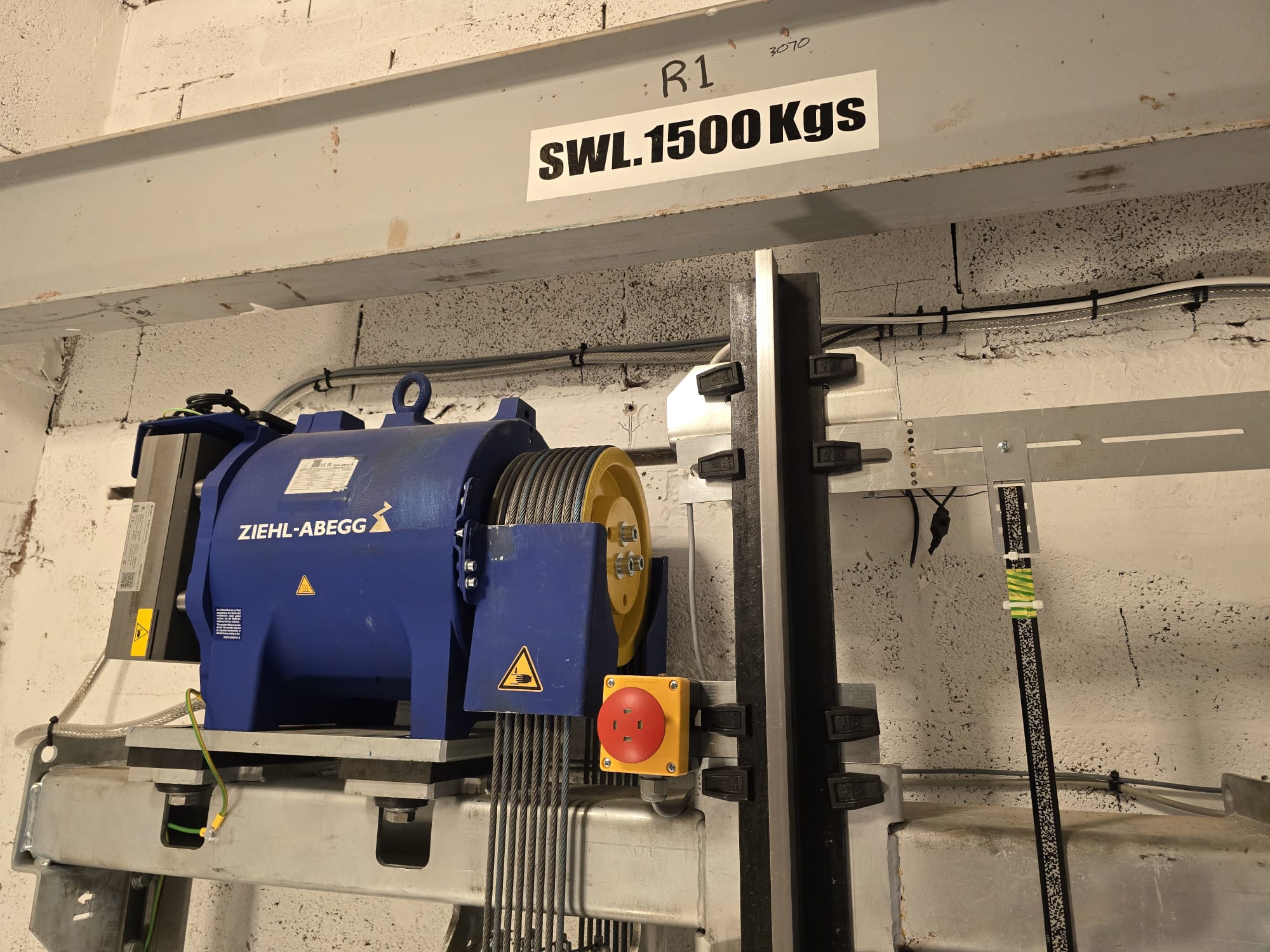
Older lifts often run on single or two speed motors that draw high starting currents and deliver a rough ride. Replacing the drive with a variable frequency system, and where needed a new motor, gives smooth acceleration, accurate stopping and a marked reduction in energy consumption. On hydraulic lifts, valve block and pump upgrades achieve a similar improvement.
Door Operators And Door Protection
Doors cycle more than any other part of a lift and account for a large share of faults. A new door operator with full height light curtain protection makes the doors quieter, faster and far safer for passengers. Door equipment can be upgraded on its own or as part of a wider project.
Safety Systems And Compliance Upgrades
Modernisation is the natural opportunity to bring an older lift closer to current expectations. Typical items include overspeed governor and safety gear checks, unintended car movement protection, car top and pit safety improvements for engineers, and updated landing and car indicators. Our engineers will explain which upgrades are advisable for your lift and which are optional.
Emergency Communication And Auto Diallers
Every passenger lift needs a reliable means of two way communication to a permanently staffed point. Many older auto diallers depend on analogue telephone lines that no longer work reliably on the digital network. We fit modern GSM or IP based emergency communication units as standard on modernisation projects, and can fit them as a standalone upgrade where needed.
Energy Efficiency And Regenerative Drives
Variable frequency drives, LED car lighting, automatic standby modes for lighting and ventilation, and efficient door operators together make a meaningful difference to running costs. On busy lifts with significant travel, a regenerative drive returns energy to the building supply during descent and braking, which shortens the payback period further.
Partial Versus Full Modernisation
Not every lift needs everything replaced. A partial modernisation targets the components that are causing problems, most commonly the controller, the door operator or the emergency communication unit, and leaves the remainder in service. It is a sensible route where budget is constrained or where the rest of the lift is in good condition.
A full modernisation replaces the controller, drive, door equipment, safety systems and communication together, and often includes a cabin interior refresh at the same time. It gives the longest service life and the greatest improvement in performance, and it avoids the disruption of returning to the same lift for a second phase of work later.
Where a full modernisation is the right long term answer but the budget does not allow it in one year, we can phase the work across two or three years. Controls in the first year, doors in the second and interiors in the third is a common and workable pattern.
The Lift Modernisation Process, Step By Step
We keep the process straightforward and we tell you what to expect at each stage.
- 1
Free site survey.
An engineer inspects the lift, reviews its fault history and identifies what should be replaced, what can be retained and any compliance points to address.
- 2
Written proposal.
You receive a clear scope of work, a fixed quotation and a realistic programme, with options set out where a choice exists.
- 3
Specification and ordering.
Once approved, we specify compatible equipment and place orders. Manufacturing lead times are confirmed at this point.
- 4
Programme agreement.
We agree working hours, access arrangements and communication with building users, and we plan around any other lifts in the building so access is maintained wherever possible.
- 5
Installation.
Our engineers remove the old equipment and install the new controller, drive, door equipment and safety systems.
- 6
Testing and commissioning.
The lift is tested through its full range of operation, safety functions are proven and ride quality and levelling are fine tuned.
- 7
Handover.
You receive commissioning documentation, updated equipment records and guidance on the new system. The modernised lift then moves onto a maintenance schedule suited to the new equipment.
How Long Does Lift Modernisation Take?
A control system upgrade on a single lift can often be completed in under a week. A full modernisation covering controls, drive and doors typically takes two to four weeks on site depending on the number of floors and the equipment involved. Bespoke cabin interiors or unusual equipment can extend the programme.
The lift is out of service for the duration of the on site work, so we agree the programme with you in advance and can work evenings or weekends where that reduces disruption. In buildings with more than one lift we phase the work so that at least one lift remains available throughout.
Lift Modernisation Costs: What Drives The Price
The cost of a modernisation depends on five things: the scope of work, the age and type of the lift, the number of floors served, the condition of the equipment being retained and the level of finish required in the cabin. A standalone control panel upgrade sits at the lower end of the range. A full modernisation of a multi storey traction lift with a new interior sits at the upper end.
We have written a detailed guide to lift modernisation costs in the UK which sets out typical ranges for partial, mid scope and full projects. For your own lift, the only reliable figure is a fixed quotation following a survey, which we provide free of charge and without obligation.
Benefits Of Modernising Rather Than Replacing
Lift Types We Modernise
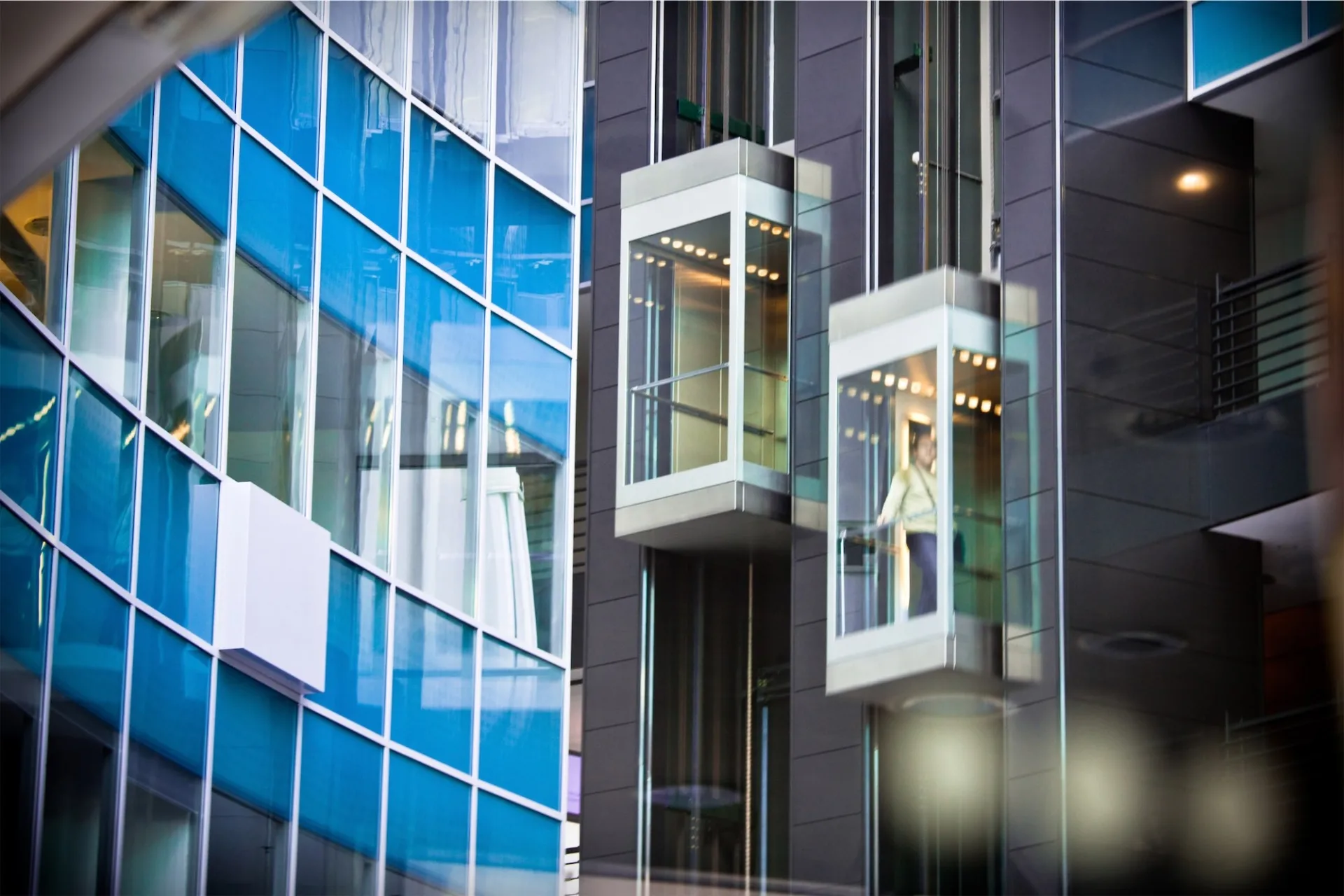
We modernise passenger lifts, goods lifts, platform lifts, service lifts, glass lifts, firefighting lifts and car park lifts. That covers traction, machine room less and hydraulic systems from every major manufacturer, including installations where the original supplier no longer trades or no longer supports the equipment.
Why Choose Lancs & Cumbria Lifts
We are an independent lift company with more than 30 years in the industry. Independence means we specify the equipment that suits your lift and your budget rather than a single manufacturer’s range, and it means you are not tied to one supplier for parts or maintenance afterwards.
Our engineers hold LiftCERT, SafeContractor and LEIA accreditations, we provide fixed quotations following a survey, and every modernised lift can be supported through our lift servicing and maintenance contracts and 24 hour call out service once the work is complete.

Lift Modernisation FAQs
What is the difference between lift modernisation and lift refurbishment?
Refurbishment generally focuses on condition and appearance, replacing worn components and updating cabin finishes. Modernisation replaces the technology inside the lift, typically the control system, drive and door operators, to improve reliability, safety and efficiency. Many projects combine both, but modernisation is the element that changes how the lift performs.
How much does lift modernisation cost in the UK?
Cost depends on the scope of work, the age and type of the lift, the number of floors served and how much of the existing equipment can be retained. A control panel upgrade sits at the lower end of the range and a full modernisation covering controls, drive, doors and interior at the upper end. We provide a fixed quotation following a site survey so there are no surprises.
Is lift modernisation cheaper than a full replacement?
In most cases yes, often significantly so, because the shaft, guide rails and structural work are retained. It also avoids the extended downtime and building disruption a full replacement involves. Where a lift is beyond economic repair or no longer suits the building, replacement can be the better long term decision, and our survey will tell you which applies.
How long will my lift be out of service during modernisation?
A control system upgrade can often be completed in under a week. A full modernisation covering controls, drive and doors typically takes two to four weeks depending on the number of floors and the equipment involved. We agree the programme in advance so building users can be informed.
Will modernisation reduce my lift’s energy consumption?
Usually. Older lifts frequently run on inefficient drive systems and permanently powered lighting and ventilation. Modern variable frequency drives, LED car lighting, standby modes and regenerative drives on suitable installations can all reduce consumption noticeably.
Can you modernise a lift installed by another company?
Yes. We work across all major makes and models. Where original documentation is unavailable, our engineers survey the installation and specify compatible equipment as part of the modernisation proposal.
Does modernisation improve compliance?
Modernisation is an opportunity to bring older equipment closer to current standards, including door protection, emergency communication and control system safety functions. It does not replace the statutory LOLER thorough examination, but it commonly resolves issues raised during one.
Request A Free Lift Modernisation Survey
If your lift is becoming unreliable, expensive to repair or difficult to source parts for, a modernisation survey will tell you exactly where you stand. Call 01942 242413 or contact our team to arrange a free, no obligation survey anywhere in the UK.