
LOLER Regulations & Thorough Examinations
What LOLER requires of UK lift owners, how often lifts must be examined and how it differs from routine servicing.
If you own, manage or are responsible for a lift in a UK building, LOLER is the piece of legislation that decides how often that lift must be independently examined, who is responsible for arranging it and what has to happen when a problem is found. It is also the regulation most often confused with routine servicing, and that confusion is where many buildings quietly fall out of compliance.
This guide sets out what LOLER actually requires of you, how it sits alongside PUWER, what a thorough examination involves and how it differs from the planned lift servicing and maintenance your lift also needs. Lancs & Cumbria Lifts has worked with LOLER since the regulations came into force, and our engineers deal with examination findings on lifts of every make and age across the UK every week.
Get Your Free Quote
Get in touch with our team for a free quote using the contact form below. Alternatively, call our team on 01942 242 413 or email us at enquiries@lclifts.co.uk and we’ll be happy to help.
What Is LOLER?
LOLER stands for the Lifting Operations and Lifting Equipment Regulations 1998. The regulations were made under the Health and Safety at Work etc. Act 1974 and apply across Great Britain. Their purpose is simple: to make sure that any equipment used to lift people or loads at work is strong enough, stable enough, properly installed, safely used and regularly examined by someone competent to judge its condition.
For passenger lifts, goods lifts and platform lifts, the practical heart of LOLER is Regulation 9, which requires the equipment to undergo a thorough examination at set intervals and after certain events. The regulations also require lifting operations to be planned and supervised, equipment to be marked with its safe working load, and the results of every examination to be recorded and acted upon.
LOLER is enforced by the Health and Safety Executive and by local authorities, depending on the type of premises. Failing to comply is a criminal matter, not a civil one, and it is the duty holder rather than the lift company who carries that responsibility.
WE TAKE LIFT SAFETY AND RELIABILITY
TO NEW HEIGHTS
Does LOLER Apply To My Lift?
LOLER applies to lifting equipment that is provided for use, or used, at work. In practice that captures almost every lift in a commercial, industrial, public or healthcare building, because staff, cleaners, contractors and visitors on business all use it as part of their work. The lifts and equipment that fall within scope include:
What about residential blocks? A lift in a block of flats that is used only by residents and their guests is not, strictly, being used at work. However, the moment it is used by a caretaker, a cleaning contractor, a managing agent or a maintenance engineer, it is work equipment for them and LOLER applies. HSE guidance is clear that duty holders for residential lifts should follow the same thorough examination regime, and in our experience every responsible managing agent and residents management company does.
Lifts in private single family homes used only by the household are outside LOLER. Everything else should be treated as in scope.
LOLER And PUWER: How They Work Together
LOLER rarely stands alone. The Provision and Use of Work Equipment Regulations 1998, known as PUWER, apply to all work equipment, and a lift is work equipment before it is lifting equipment. The two sets of regulations overlap by design and are usually dealt with together.
PUWER is about the equipment being suitable for its purpose, maintained in an efficient state and in good repair, used only by people with adequate information and training, and fitted with appropriate guards and controls.
For a lift owner, PUWER is what obliges you to keep the lift properly maintained.
LOLER adds the lifting specific duties on top: strength and stability, positioning and installation, safe working load marking, planning of lifting operations and the statutory thorough examination.
For a lift owner, LOLER is what obliges you to have the lift independently examined.
A lift servicing and maintenance contract satisfies the first duty. It does not satisfy the second. Both are required, and they are carried out by different people for different reasons.
What Is A Thorough Examination?
A thorough examination is a systematic and detailed inspection of the lift carried out by a competent person, with the specific purpose of detecting any defect that is, or could become, a danger to people. It is an assessment of safety, not a maintenance visit. The examiner is not there to lubricate, adjust or repair anything. They are there to form an independent judgement on whether the lift is safe to continue in use, and to put that judgement in writing.
Who counts as a competent person? Under LOLER it is someone with the theoretical knowledge and practical experience of the type of equipment being examined to detect defects and assess how serious they are. In the lift industry this is usually an engineer surveyor employed by an inspection body or insurer, working independently of whoever maintains the lift.
A Thorough Examination Is Required At Four Points
- 1
Before First Use
Before the lift is used for the first time, unless it is new and supplied with a declaration of conformity made less than twelve months earlier.
- 2
After Installation
After installation or assembly at a new location, or after re-assembly, to confirm it has been installed correctly and is safe to operate.
- 3
At Periodic Intervals
At the periodic intervals set out below, or in accordance with a written scheme of examination drawn up by a competent person.
- 4
After Exceptional Circumstances
After any event liable to affect its safety, such as damage, a long period out of use, an overload event or significant modification.
Planning a new lift installation? Build the post installation examination into the programme from the start so there is no gap between handover and the lift being legally available for use.
How Often Must A Lift Be Thoroughly Examined?
LOLER sets two default intervals and allows a third approach. Which applies to you depends on what the lift carries.
Six Monthly Examinations For Passenger Carrying Lifts
Any lift used to carry people must be thoroughly examined at least once every six months. This covers passenger lifts, platform lifts, wheelchair lifts, stairlifts and any goods lift that people ride in. The interval reflects the consequences of a failure when a person is in the car.
Twelve Monthly Examinations For Goods Only Lifts
Lifts that carry goods only, with nobody riding in the car, must be thoroughly examined at least once every twelve months. Dumbwaiters, document lifts and vehicle lifts with no driver aboard are typical examples. If staff ever ride in a goods lift, even occasionally, treat it as passenger carrying.
Examination Under A Written Scheme
As an alternative, a competent person can draw up a written scheme of examination tailored to the lift, how it is used and its condition. The scheme can set different intervals for different parts of the equipment, which is useful where a lift sees very heavy or very light use.
Whichever regime applies, the interval runs from the date of the last examination, not from the date the report arrived or the date you got around to reading it. Diary the next due date the day the report lands.
Who Is The Duty Holder?
LOLER places its duties on the employer or self employed person who provides the equipment, and on anyone who has control of the equipment, its use, or the way it is used. That person or organisation is the duty holder. For lifts in buildings, the duty holder is normally one of the following:
The duty usually sits with whoever controls the common parts, which is typically the landlord or their agent. Where it is unclear, the safest assumption is that responsibility is shared and should be agreed in writing. What does not work is each party assuming the other has it covered.
Ensure examinations are carried out on time by a competent person, receive and act on the reports, take defective equipment out of use where required and keep the records. The duty cannot be delegated to the lift maintenance contractor, although a good contractor will remind you when examinations fall due.
What Happens During A Thorough Examination
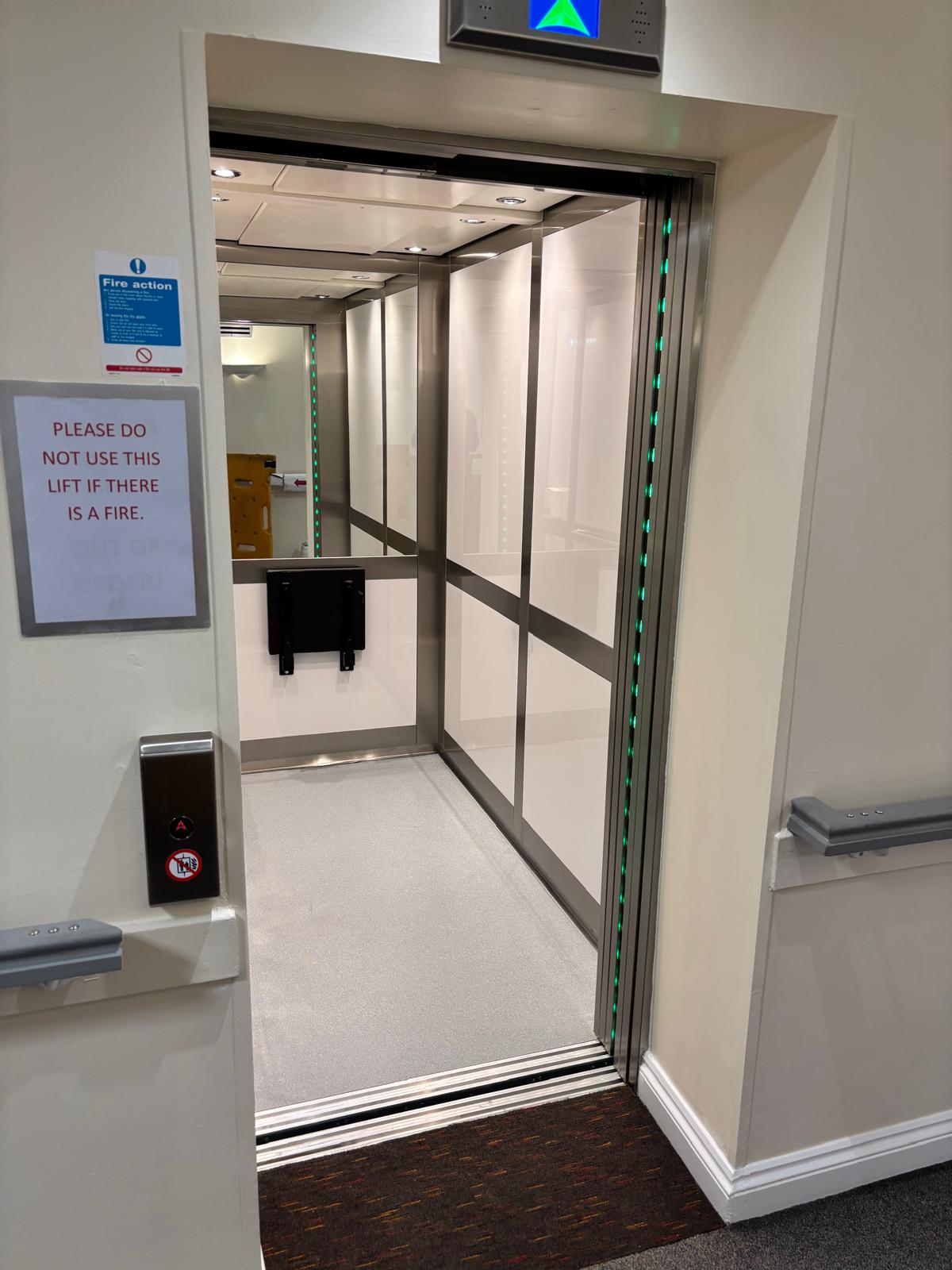
The lift is taken out of service for the duration, usually two to four hours for a standard passenger lift and longer for large, high rise or multi car installations, so it is worth telling building users in advance. The examiner will want access to the machine room or control cabinet, the pit and the car top, along with the maintenance records and the previous report. A typical examination of a traction passenger lift covers:
Hydraulic lifts attract extra attention to the ram, cylinder, hoses, valve block, rupture valve and oil condition, and platform lifts have their own checks around the enclosure, controls and safety edges.
Understanding Your Report And Defect Categories
After every thorough examination the competent person must produce a written report. It must identify the equipment, the date, the safe working load and the date of the next examination, and list any defects with the action required and the timescale for it. The wording varies between inspection bodies, but defects are presented in a broadly consistent way:
Immediate Danger
A defect that is a danger to people now. The examiner will state that the lift must not be used.
What to do: take the lift out of service straight away and keep it out until the defect is repaired and confirmed safe.
Could Become A Danger
A defect that is not dangerous today but will be if it is not corrected within a stated period.
What to do: arrange the repair within the timescale given on the report and do not let the date pass.
Observation Or Advisory
A matter the examiner wants you to be aware of, such as wear to monitor or a recommended improvement.
What to do: review it with your maintenance provider and plan the work into servicing or a future upgrade.
A report with no defects listed is not a certificate of perfection. It records that at the time of examination the competent person found nothing that was, or could become, a danger. Problems can still develop between examinations, which is why servicing frequency and examination frequency are set independently.
Records You Must Keep
Record keeping is the part of LOLER that is most often neglected and most easily checked by an inspector. The duty holder must keep:
Reports may be kept electronically as long as they can be produced on request. Our strong recommendation is to keep a rolling history of every report for the life of the lift, alongside maintenance visit records and repair invoices. Together they show how the lift’s condition has changed over time, support decisions about lift modernisation and are the first thing an insurer, an inspector or a prospective buyer of the building will ask to see.
LOLER Versus Lift Servicing: The Difference That Catches People Out
This is the single most important point on this page. The two are complementary and both are required. Having a maintenance contract, however comprehensive, does not satisfy LOLER. Equally, passing a thorough examination does not mean the lift has been serviced.
Preventative maintenance. An engineer attends on a planned schedule, inspects, cleans, lubricates, adjusts and replaces worn components so the lift keeps running reliably. It is carried out by the lift company you contract with, at a frequency agreed between you, and it discharges your duty under PUWER.
A statutory safety assessment. It is carried out by an independent competent person at intervals fixed by LOLER, and its output is a legal document rather than a worksheet. The examiner does no maintenance. They assess whether the lift is safe and report defects for you to act on.
| Lift Servicing | LOLER Thorough Examination | |
|---|---|---|
| Purpose | Keep the lift reliable and in good repair | Confirm the lift is safe to use and report defects |
| Carried out by | Your lift maintenance company | An independent competent person, usually an engineer surveyor |
| Frequency | Agreed with your provider, typically 4 to 12 visits a year | Every 6 months for passenger lifts, every 12 months for goods only lifts, or per written scheme |
| Regulation | PUWER and the maintenance contract | LOLER Regulation 9 |
| Output | Visit report and worksheet | Statutory report of thorough examination |
| Hands on work | Yes, adjustment, lubrication and minor repairs | No, assessment only |
Why independence matters. HSE guidance recommends that the person carrying out the thorough examination should be sufficiently independent of the maintenance provider to make an impartial judgement. Many building owners arrange examinations through their property insurer’s engineering inspection service for that reason. We work alongside all the major inspection bodies and are happy to attend examinations with the examiner where that helps.
What Happens If A Defect Is Found
When a report identifies a defect, the response depends on its category. Enforcing authorities do follow up, so a notified defect left unrepaired is a serious matter.
- 1
Immediate Danger: Stop Use
The duty holder must stop the lift being used until the defect has been rectified. In practice the examiner will usually ask for the lift to be switched off and signed out of service before they leave site.
- 2
Timed Defects: Repair In Time
For defects that could become a danger, the report gives a timescale. If the date passes with the work undone, the lift should be treated as unsafe and taken out of use until it is.
- 3
The Examiner Reports It
Reports must reach the duty holder within 28 days, and immediately where a defect is dangerous. Where there is a risk of serious injury, the examiner must also notify the HSE or local authority.
- 4
Send It To Your Lift Company
Pass the report to your maintenance provider the day it arrives. Our engineers carry out LOLER defect repairs on all makes and models and can usually attend within the report timescale, including out of hours.
Where a defect is a symptom of an ageing control system or drive rather than a one off fault, we will say so and set out the modernisation options rather than simply patching it.
Booking A LOLER Inspection
Whether you need an examination arranging for the first time, have taken over a building with no examination history, or simply want a lift company that will keep the whole compliance picture in view, we can help. As an independent lift company with more than 30 years in the industry and engineers covering the whole of the UK from our Wigan base, we look after the maintenance side, coordinate thorough examinations with the inspection body, respond to defect reports and keep your records in order.

LOLER FAQs
How often does a lift need a LOLER thorough examination?
Lifts that carry people must be thoroughly examined at least every six months. Lifts used only for goods must be examined at least every twelve months. A competent person can also set different intervals under a written scheme of examination tailored to the equipment and how it is used.
Is a LOLER inspection the same as lift servicing?
No, and confusing the two is one of the most common compliance failures we see. Servicing is preventative maintenance carried out by your lift company to keep the lift working reliably. A thorough examination is an independent statutory assessment of whether the lift remains safe to use. A maintenance contract on its own does not satisfy LOLER.
Who is responsible for LOLER compliance?
The duty holder, which is the person or organisation in control of the lift. In practice that is usually the building owner, the managing agent, the residents management company or the employer whose staff use the lift. The duty is to make sure examinations happen, defects are acted on and records are kept.
What happens if a defect is found during a thorough examination?
The report categorises the defect by urgency. Some require the lift to be taken out of service immediately until repaired. Others carry a specified timescale within which the duty holder must act. Where a defect presents a serious risk, the examiner must also notify the enforcing authority.
How long must I keep LOLER records?
Periodic examination reports must be kept until the next report is issued and for at least two years. The report from the examination after installation must be kept for as long as the lift remains in use. Keeping a full rolling history for the life of the lift is strongly advisable.
Do platform lifts and stairlifts need LOLER examinations?
Yes. Any lifting equipment used at work that carries people is within scope, which includes platform lifts, wheelchair platform lifts and stairlifts in commercial and public settings. Because they carry people, they are on the six month cycle.
Does a new lift need a thorough examination before use?
A new lift supplied with a declaration of conformity made within the last twelve months does not need a separate pre use examination, but it does need one after installation to confirm it has been installed correctly and is safe to operate. Periodic examinations then follow at the normal intervals.
Can Lancs & Cumbria Lifts carry out my thorough examination?
We arrange and coordinate thorough examinations with independent inspection bodies, attend with the examiner where useful and carry out any repairs the report calls for. Keeping the examination independent of the maintenance provider is the approach HSE guidance recommends and the one we follow.
Book Your Next LOLER Examination
Not sure when your lift was last examined, or holding a report with open defects? Call 01942 242413 or contact our team and we will help you bring your lift up to date and keep it there.